


Adults often want to understand how an orthodontic appliance will fit work, social plans and daily care. A less noticeable option can be a reasonable preference, but visibility is only one part of choosing treatment. The appliance must also suit the teeth, bite and health of the supporting tissues.
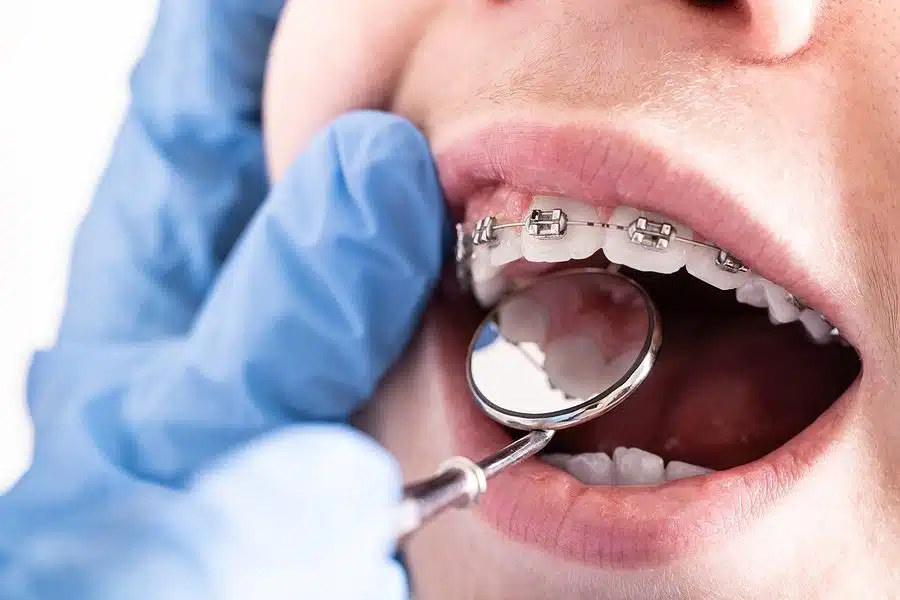
Ceramic braces, lingual braces and clear aligners take different approaches to appearance and daily responsibilities. This guide helps adults near Edison compare those categories and prepare useful questions. Availability varies by practice; a general comparison does not mean every option is offered by Smile Solutions.
Begin with the diagnosis
An orthodontic assessment looks beyond the front teeth. Bite relationships, planned movements, dental restorations, gum health and previous treatment can influence which options are appropriate. Ask the clinician to explain the goals and any limitations before comparing the appearance of appliances.
The American Association of Orthodontists’ braces information describes different fixed-appliance approaches, while its aligner guidance explains removable trays. These are treatment categories, not a guarantee that every system can achieve every movement for every adult.
If another dentist or periodontal specialist is involved, clarify the sequence of care. Orthodontics does not replace treatment of dental disease.
Compare three less-visible approaches
| Option | Appearance | Daily responsibilities | Questions to ask |
|---|---|---|---|
| Ceramic braces | Tooth-colored or clear brackets may blend more closely with teeth | Clean around fixed brackets and wires; follow food precautions | Which components will be visible, and is ceramic suitable for my bite? |
| Lingual braces | Brackets are positioned on the tongue side of teeth | Clean around the fixed appliance and adapt to its position | Is this offered, am I a candidate and what adaptation should I expect? |
| Clear aligners | Clear removable trays may be less noticeable; attachments or elastics can show | Meet prescribed wear, remove as instructed and clean teeth and trays | What components, wear routine and monitoring will my case require? |
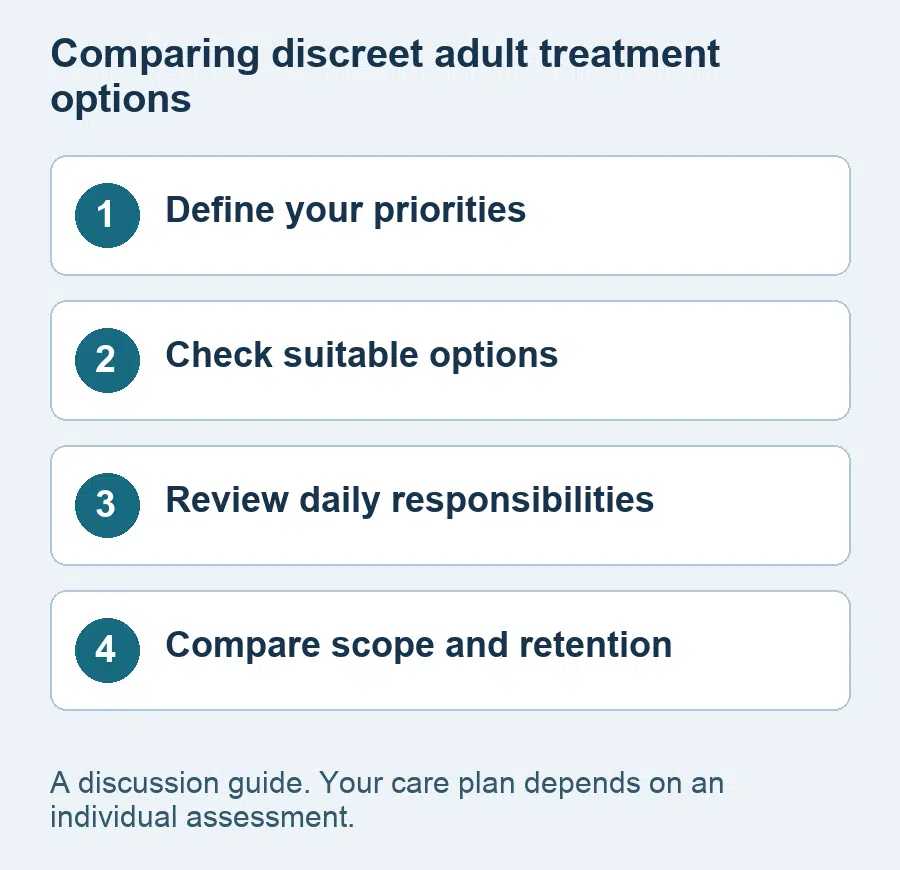
No category is completely invisible or guaranteed to be painless. Ask to see the components proposed for your actual plan rather than relying on a generic photograph.
Ceramic braces: a fixed appliance with a different appearance
Ceramic brackets can appeal to adults who prefer less visible brackets but want a fixed appliance. Wires and other components can still be noticeable. The material and the mechanism holding the wire are separate choices; ceramic does not automatically mean self-ligating.
Cleaning and food precautions still apply. Ask which parts can change appearance over time and how they are maintained. Do not assume that every tooth-colored component is stain-proof or that one bracket material guarantees a shorter treatment time.
The orthodontist may recommend different components in different parts of the mouth. Ask whether that reflects your bite, the planned movements or another practical consideration.
Lingual braces: less visible from the front, with their own demands
Lingual braces place brackets on the tongue side of teeth. That position can reduce visibility from the front, but it changes where the appliance contacts the mouth and how it is cleaned. Ask about speech, tongue adaptation, access for cleaning and the expected review schedule.
Suitability and provider availability require confirmation. This article does not establish that Smile Solutions offers lingual braces. If you want to explore them, ask the practice directly about availability, candidacy and whether another assessment is appropriate.
Do not assume that a hidden position means a simpler treatment or no adjustment period. The complete clinical plan still matters.
Clear aligners: removable, with a wear commitment
Aligners can be removed for meals and cleaning, following the clinician’s instructions. That flexibility creates a responsibility to reinsert them and meet the prescribed daily wear time. Invisalign’s general guidance is 20–22 hours per day; your clinician sets the actual instructions and tray-change schedule.
Attachments, elastics or other components may be needed. Ask what will be visible and what happens if a tray is lost or stops fitting. A busy workday with repeated snacks and meetings deserves a practical wear and cleaning plan.
Do not advance trays early or leave them out for an event without discussing the instructions. Removability does not make treatment independent of professional monitoring.
Match the routine to your own life
Consider how you eat, travel, speak at work and manage cleaning. A fixed appliance stays attached but needs careful access around brackets. A removable appliance offers access to the teeth but requires consistent wear and safe storage.
Adults with restorations or gum concerns should discuss those details explicitly. Aesthetic preference should be balanced with the health and stability of the mouth, along with any treatment limitations.
Ask about comfort measures and what symptoms should prompt a call. Severe or persistent pain, swelling or significant appliance damage needs assessment rather than an assumption that adaptation always explains it.
Five steps for a useful comparison
- State your goals. Include bite concerns, appearance preferences and the routines that may affect treatment.
- Confirm suitable options. Ask why each proposed approach fits the diagnosis and what alternatives may involve.
- Review the actual components. Include wires, attachments, elastics and any mixed-appliance arrangement.
- Compare complete estimates. Check records, reviews, additional stages, repairs, retainers and payment terms.
- Plan long-term retention. Understand what follows active treatment and the ongoing wear and replacement responsibilities.
A monthly payment or a projected finish date is not the full comparison. Keep the written scope beside the estimate so you can understand differences in care.
Plan for the result as well as the appliance
Retainers generally follow active orthodontic treatment to help limit unwanted movement. The required appliance and schedule are individualized and often involve long-term wear. No discreet treatment option makes retention unnecessary.
Smile Solutions’ Edison braces information and Edison Invisalign information can help you prepare for a consultation and confirm current services. Use the appointment to choose a plan you understand and can maintain.
Frequently asked questions
Which option is completely invisible?
None should be promised as completely invisible. Ceramic brackets, lingual components, trays or attachments can be visible depending on the situation.
Are lingual braces offered by every orthodontic practice?
No. Confirm availability and candidacy directly. This comparison does not establish that Smile Solutions provides that service.
Are clear aligners always faster than braces?
No. Timing depends on the findings, planned movements, biological response and cooperation. Ask for an individualized estimate.
Do ceramic braces need cleaning around wires?
Yes. They are fixed appliances and require careful cleaning plus the recommended food and activity precautions.
Will I need retainers after a discreet treatment option?
Generally yes. The orthodontist prescribes retention to help limit unwanted movement after active treatment.