


Temporomandibular joint disorder, also called TMD or TMJ, develops when uneven stress or strain puts excessive pressure on the joints of your jaw, causing your muscles and joints to become irritated and inflamed. Those with TMJ may also experience frequent headaches. If you are seeking TMJ care in Edison, Millburn, and Union, NJ, our experienced team can help eliminate the pain. New to TMJ? Read our complete guide to TMJ treatment in Edison, NJ.
TruDenta® Headache Relief
 Suffering from headaches or other head pain? Tired of living on pain medications? Frustrated by missing work days and important family events? Ready for a real, long-lasting pain-relief solution?
The leading cause of headaches is not what you think, and it’s not all in your head. TruDenta can help. TruDenta treats the cause of many headaches and headache-pain symptoms and provides long-lasting, needle-free, and drug-free pain relief.
What Is TruDenta Headache Pain Treatment?
The TruDenta System is an approach to chronic headache relief that addresses and treats the cause of the problem instead of temporarily masking the pain. Using a combination of techniques derived from sports medicine therapies, the TruDenta System targets the improper muscle forces in the head, neck, and jaw area that cause painful conditions.
Why Would I Want TruDenta Treatment?
 Research has shown that the causes of chronic migraines, tension headaches, vertigo, tinnitus, TMJ/TMD, and face, jaw, and neck pain may all be interconnected. The cause could be unbalanced forces in your mouth that affect the muscles of these areas. This leads to changes in the chemical and nerve reactions that result in chronic pain. In addition, painful symptoms could result from an accident, head trauma, bad posture, or other underlying conditions.
By treating the cause of the pain and not just the symptoms, TruDenta provides long-lasting pain relief.
About 45 million Americans annually suffer at least occasional recurring head pain. The TruDenta System offers an orthodontic headache treatment that is a proven strategy for relieving chronic headache pain. This system offers a drug-free, needle-free, and pain-free program for long-lasting pain relief.
How Does TruDenta Work?
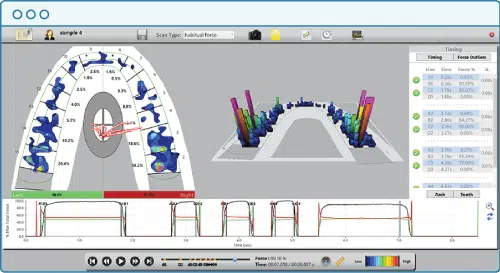
The TruDenta headache pain evaluation is easy and simple. After you’ve discussed your head health history with our specialist, the objective and computer-assisted TruDenta evaluation will help to pinpoint your headache cause. Based on the findings during the evaluation, a personalized in-office treatment will be prescribed.
Your treatment works by re-training the muscles and nerves connected by the trigeminal nucleus to function properly. TruDenta treatments last about 50 minutes and include the use of several proven, FDA-cleared technologies. Depending upon the severity of your diagnosis, your treatment may consist of one to 12 treatments completed weekly.
“After 40 years of headaches, I haven’t had another one in the 15 months since I completed treatment.”
— One of TruDenta’s many happy, pain-free patients
Do You Experience One or More of the Following?
- One or more chronic headaches a week
- Two or more missed days of work a month due to headaches
- Pain in your jaw, face, neck, shoulders, and arms for longer than a year
- Ringing or fullness in your ears
Would You Like Your Headache Pain Relief to Be:
- Drug-free?
- Pain-free?
- Long-lasting?
- From state-of-the-art technology?
- Derived from proven sports medicine therapy?
If you answered yes to one or more of these questions, ask us whether TruDenta can help you.
Frequently Asked Questions
Can a TMJ disorder go away?
Some temporomandibular disorders improve with time and conservative care; others need ongoing management. Persistent pain, locking, or difficulty opening the mouth should be assessed rather than assumed to resolve on its own.
Who should I see for TMJ symptoms?
Start with a dentist or healthcare professional who evaluates jaw pain. Depending on the findings, referral to an orofacial pain specialist or another clinician may help. Surgery is usually considered only for specific indications.
Can TMJ symptoms change how my bite feels?
Jaw joint inflammation or muscle tension can make the bite feel different. A new or persistent bite change needs assessment. TMJ symptoms alone do not establish that teeth have moved or that orthodontic treatment is needed.
Can TMJ problems damage teeth?
TMJ disorders affect the jaw joints and muscles. Coexisting clenching or grinding may wear or fracture teeth, but these are distinct issues. An examination can identify tooth damage and suitable protective care.
Can TMJ cause teeth to fall out?
A TMJ disorder by itself is not a usual cause of tooth loss. Loose teeth require prompt dental assessment for problems such as gum disease, trauma, or infection. Tell your dentist about any associated grinding or jaw pain.