


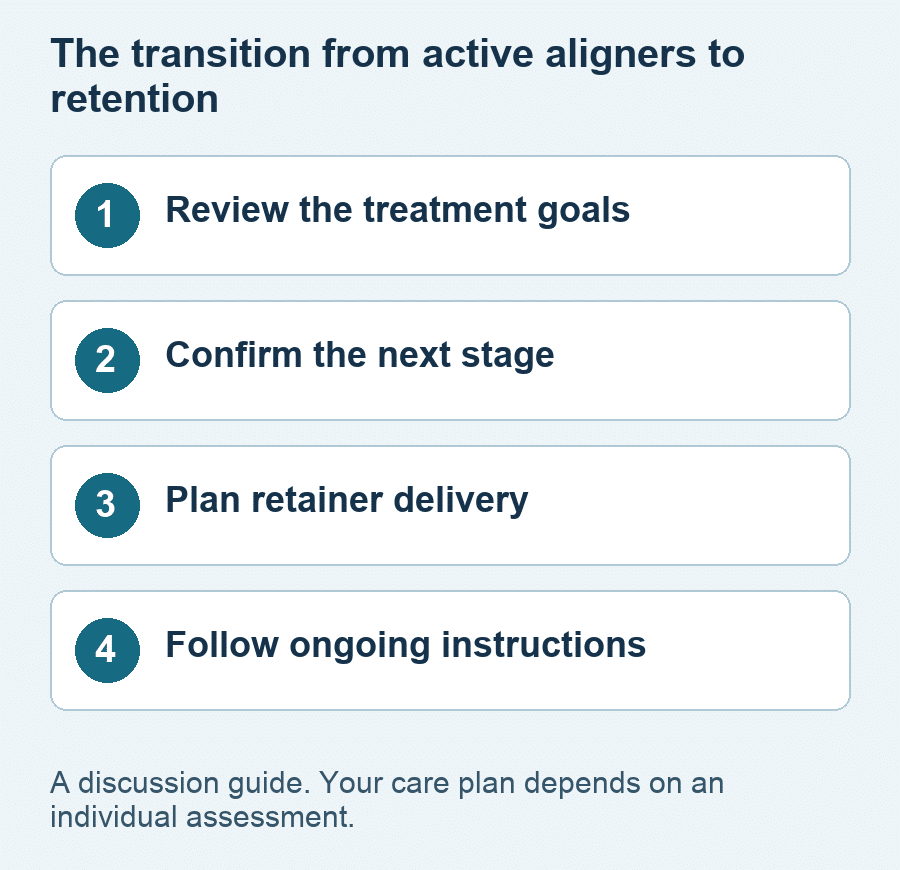
Reaching the last tray in your current Invisalign series is a milestone, but it does not independently establish that treatment is finished. Your orthodontist needs to review how the teeth and bite have responded, discuss any remaining goals and plan retention.

For patients considering Invisalign near Cranford, understanding the finish helps prevent a gap between active treatment and retainers. Do not stop wearing trays or remove attachments because the box is empty. This guide explains the questions to ask before the last programmed tray and the decisions that may follow.
The last numbered tray and clinical completion are different
The aligner sequence is a treatment plan based on your records and goals. Teeth respond biologically, and the clinician monitors whether the planned movement is occurring. The American Association of Orthodontists’ aligner guidance explains why professional planning and supervision remain part of care.
At a finishing review, the orthodontist may assess alignment, bite contacts, fit, oral health and the goals agreed at the start. Your observations also matter. Tell the team about chewing concerns, sensitivity, an area that still feels different or a result you do not understand.
A simulation is not a guaranteed final outcome. Ask the clinician to compare the current findings with the agreed goals and explain the next step.
Three possible discussions at the finishing review
You may be ready for the transition to retention. Another possibility is an additional aligner stage or another adjustment to work toward the agreed goals. In some cases, limitations or a different approach need discussion.
Additional treatment should be explained rather than treated as an automatic surprise. Ask what finding it addresses, what responsibilities apply and whether it is included in the existing agreement. There is no universal rule that every patient needs refinements or that every additional stage is free.
Until you receive instructions, do not assume you should advance, return to an earlier tray or leave the appliance out. Contact the practice if the final review or retainer appointment is delayed.
Use a finishing checklist
| Topic | Question to ask | Detail to keep |
|---|---|---|
| Treatment goals | Are the agreed alignment and bite goals met, or is more treatment recommended? | The reason for the next step |
| Current tray | What should I wear while waiting for the next appointment or retainer? | Exact wear instructions |
| Attachments and other components | When and how will they be removed professionally? | Appointment and care advice |
| Retainer | What type is recommended and how will it be made and delivered? | Delivery timing and fit check |
| Ongoing wear | What schedule applies now and over the long term? | Written instructions |
| Future care | Who reviews fit, and what happens if the retainer is lost or damaged? | Contact and replacement arrangements |
Attachments are removed professionally
If your plan includes attachments, the clinical team decides when removal is appropriate. The manufacturer’s attachment information explains their role in aligner treatment. Do not scrape, file or pull them off yourself.
Ask about the finishing process and any checks afterward. Removal of attachments does not mean you no longer need an appliance. The transition to a retainer should be coordinated so you understand what to wear at each point.
If a bonded component comes loose before that appointment, report it. The correct response depends on the current plan, not just how close you feel to the finish.
Why retention follows tooth movement
Teeth can change position after active treatment. The AAO’s retainer guidance explains why retainers are used to help limit unwanted movement. Retention is generally a long-term responsibility, with the appliance and wear schedule prescribed individually.
Do not assume that wearing a retainer for a few months guarantees permanent stability without further wear. Also avoid adopting a friend’s schedule. Your clinician’s instructions reflect your treatment and findings.
Ask how to clean, store and inspect the retainer, when fit should be reviewed and what changes deserve a call. A retainer that no longer fits should not be forced onto the teeth.
A five-step plan before the final tray
- Confirm the review appointment early. Tell the team which tray you are wearing and when the current series ends.
- Write down your remaining concerns. Include bite comfort, visible alignment and any oral-health symptoms.
- Ask about the clinical next step. Understand whether the plan is retention, additional treatment or another assessment.
- Confirm the transition instructions. Know what to wear while a retainer or next stage is being prepared.
- Keep the retention plan and contacts. Record wear, cleaning, review and replacement instructions.
This preparation is particularly useful before travel or a move. Let the practice know about dates that could affect delivery or follow-up.
Review costs and responsibilities
Check the written agreement for finishing visits, additional aligners, retainers and replacement appliances. A retainer’s initial delivery and a later replacement may have different terms. Ask what is included and what would create another charge.
If insurance or financing is involved, clarify any remaining balance separately from clinical completion. Finishing tooth movement and finishing payments are not necessarily the same date.
Keep routine dental care in the plan. Your dentist continues preventive examinations and treatment of dental disease, including after the orthodontic appliance changes.
After delivery, pay attention to fit
Follow the prescribed retainer schedule and contact the team promptly if it is lost, damaged, unusually tight or does not seat as instructed. Do not wait until obvious movement appears. The clinician can advise what assessment or replacement is needed.
Smile Solutions’ Cranford Invisalign information and Edison Invisalign information provide starting points for questions. Confirm the actual appointment location and finishing arrangements with the practice.
Frequently asked questions
Can I stop wearing Invisalign when the final tray is done?
Only follow the treating clinician’s instructions. The final programmed tray does not independently confirm clinical completion or establish what to wear next.
Does everyone need additional aligners?
No. The decision follows the review of progress, goals and clinical findings. Ask why any further stage is recommended and what it includes.
Can I remove attachments at home?
No. Attachment removal is a professional clinical step. Do not scrape, file or pull bonded material from the teeth.
How long will I need retainers?
Retention is generally long term. Your orthodontist prescribes the appliance and ongoing schedule; do not assume a short course guarantees permanent stability.
What if my retainer no longer fits?
Contact the team promptly and do not force it. The appropriate response depends on the fit, tooth positions and condition of the appliance.